
Stow City Directory Collections
Stow research has two complementary shelves. The Stow-Munroe Falls Public Library local-history collection holds the strongest local leads, while Akron-Summit County Public Library Special Collections provides a regional run of historic directories. The latter describes resident entries, address-organized street directories, and business listings. It is an important source for Stow work, but its coverage is for Akron and the surrounding Summit area. Open the relevant edition before saying that it includes a Stow name, street, or business.
| Collection | Years | Where held | Access and limit |
|---|---|---|---|
| Akron and surrounding-area historic directories | 1859-1969, with gaps and combined editions | Akron-Summit County Public Library Special Collections | Online directory collection; inspect each volume for Stow coverage. |
| Stow Press | 1959-1960 | Stow-Munroe Falls Public Library local history | Digitized local publication; cite the issue and page or image used. |
| Community Church of Stow News | 1934-1948 | Stow-Munroe Falls Public Library local history | Digitized community source, not a complete roster. |
| Historic phone directories | From 1914 | Akron-Summit County Public Library Special Collections | Use as dated reference only, never as present contact information. |
The online directory dates include long stretches and many breaks, so no continuous annual run should be assumed. The collection itself publishes the available editions, including 1859, 1868, 1871, several combined nineteenth-century volumes, 1894-1919, and selected editions through 1969. A missing result can reflect a gap, selective inclusion, a different municipal label, an unreadable scan, or an edition that does not reach Stow. Record the edition date and repository with every result.
Stow Library Directory Leads
The local starting point is the Stow-Munroe Falls Public Library, 3512 Darrow Rd., Stow, OH 44224, telephone 330-688-3295. Its posted weekly hours should be checked before visiting. The library links local photographs and videos, obituary help, Stow Corners material, the church-news run, Stow Press, Summit Memory, and the Stoanno yearbooks. These are especially useful when a directory gives only a period or street clue and an independent, date-specific local source is needed.
The library’s local-history page is the source for the collection shown here.
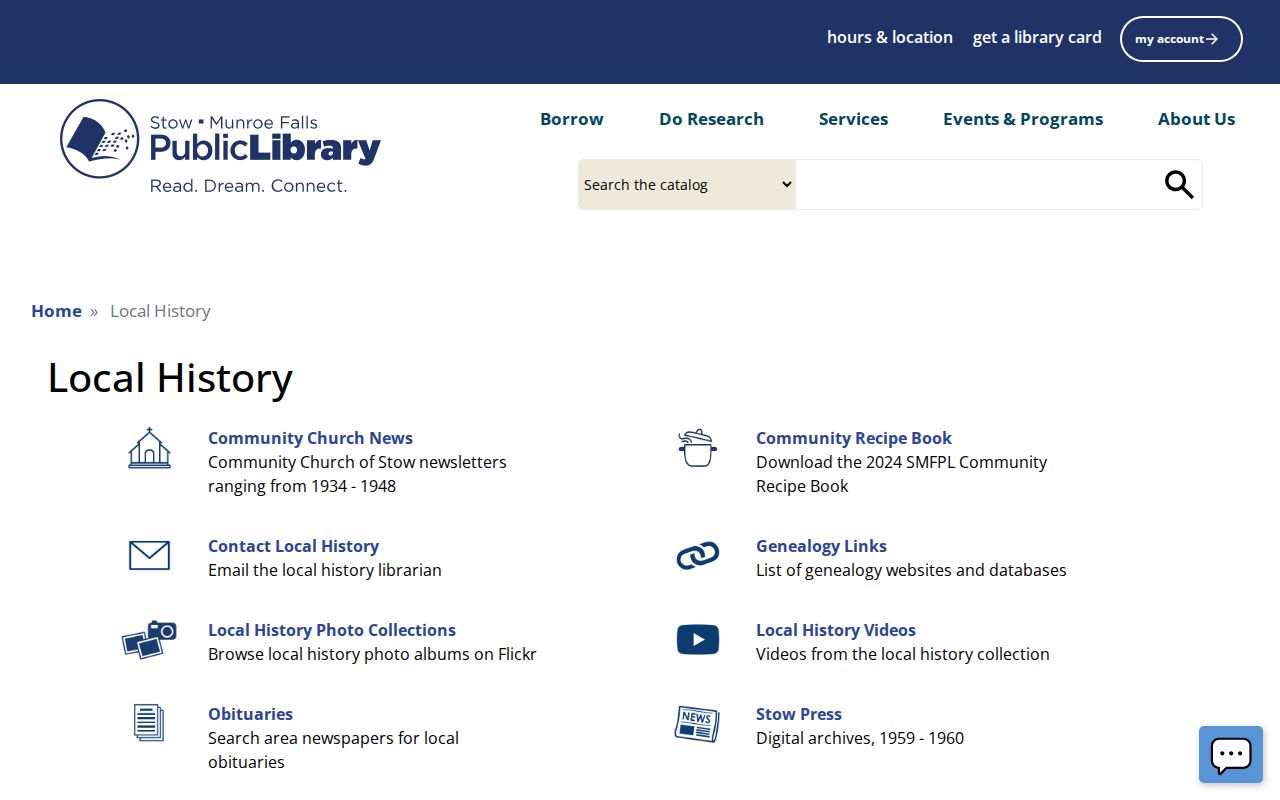
Use the collection links to reach a particular item, then preserve its title, issue date, page, and image reference beside the directory entry being tested.
Stow Regional Directory Editions
Akron-Summit County Public Library makes its historic city-directory dates available online and describes the collection as covering Akron and the surrounding area. That wording matters. A Stow researcher should search a volume individually, preserve the source image, and avoid treating the regional run as proof that every Stow address appears in every year. Its Special Collections genealogy resources also include local history, maps, regional subject indexes, and an Akron Beacon Journal obituary index from 1937 forward.
The Special Collections genealogy desk is the established route for older regional questions. For remote or in-person research, begin with the item listing and ask staff about the appropriate collection when the date is known. The library’s local-history resources identify historic phone directories from 1914 forward. A phone listing is evidence for its publication period only.
The Stow-Munroe Falls research page identifies in-library genealogy tools and history resources.
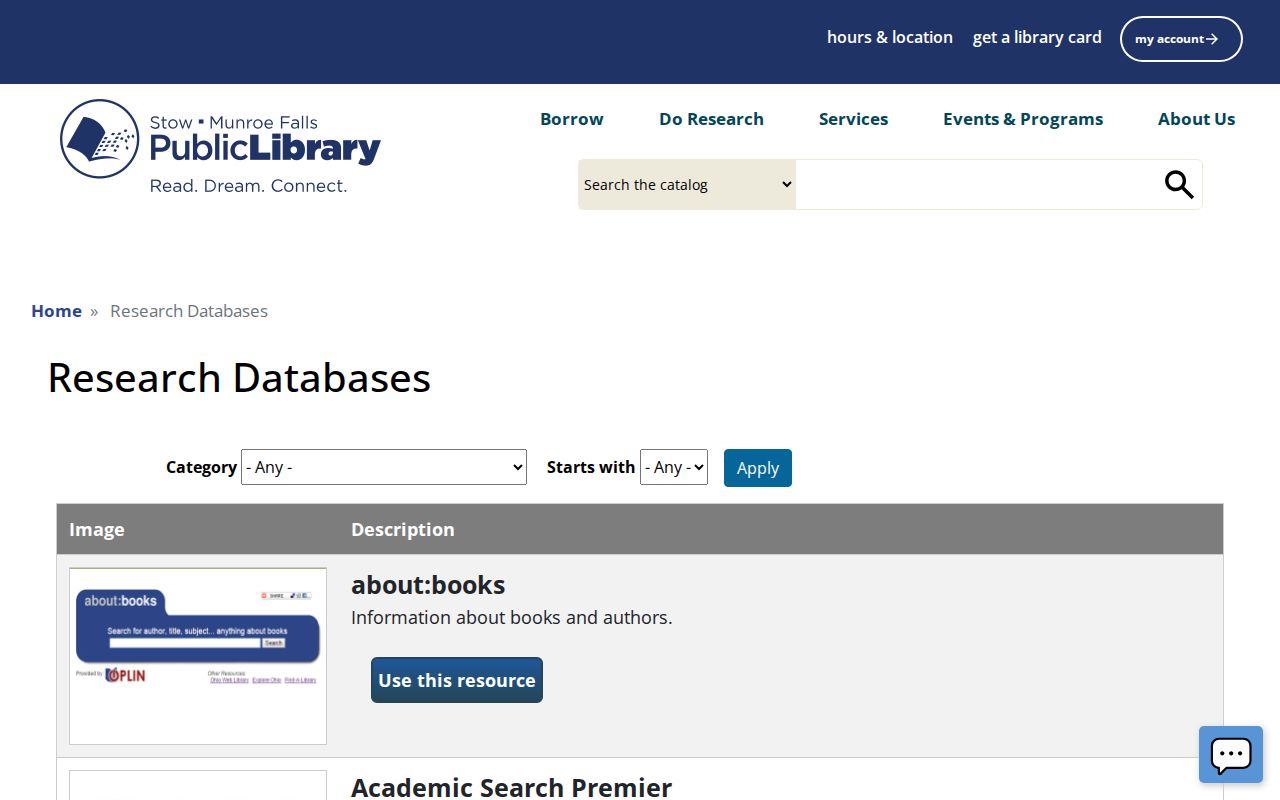
Access rules can differ by resource, so confirm whether a service is available at the library before planning a remote search.
Stow Publications Beside Directories
Stow Press and the Community Church of Stow News can add local context that a directory does not provide. They are not substitutes for a complete resident list. Use an issue only after opening it and recording the exact date and page. Stoanno offers a separate school-community strand: the library describes digitized yearbooks for 1916 and from 1951 to the present. A yearbook appearance is a dated educational or community clue, not a conclusion about a person.
For older research, the local library’s walking-tour material can help orient a dated reference around Darrow Road and Kent Road at Stow Corners. It should not be used to convert a historic mention into a claim about a present address. Note: Keep the directory edition, publication issue, and any address spelling together so later comparisons remain reproducible.
Reading a Stow City Directory
The collection-level descriptions support three kinds of material: personal or resident entries, street directories organized by address, and business entries that may identify a proprietor or officer. No scanned Stow entry was inspected during the underlying research. For that reason, the safest practice is to describe only what the actual page shows, rather than assuming every edition uses the same abbreviations, household labels, or address format.
| Personal or resident entry | Confirm the name spelling and any address wording directly from the page. |
|---|---|
| Street directory entry | Read the address in the edition’s street-order arrangement and retain the edition year. |
| Business entry | Use it only for the relationship or role printed in that edition. |
| Page image | Keep the repository, stable link if available, page or image number, and access date. |
- Criss-cross directory
- A directory section arranged by street or address rather than alphabetically. Use the term only when the edition itself presents that structure.
- Householder index
- An alphabetical index of household entries when a volume supplies one. It is not safe to assume every volume has it.
- Abbreviation key
- A legend printed by an edition to explain its shorthand. Photograph or transcribe that edition’s key before interpreting a mark.
Stow Corners and Directory Dates
Stow’s documented historic core sits around Darrow Road, also State Route 91, and Kent Road, also State Route 59. The Stow Corners history and its walking-tour brochure are place-based aids for a dated directory or newspaper reference. They do not establish a parcel connection by themselves. A recorded instrument and legal description are needed when a historical reference must be tied to a property.
The geographic context also changes with time. Early Stow research can reach back to Portage County context, while present county record custodians are in Summit County. Treat the date and record keeper as part of the fact, especially when a directory uses an older jurisdictional description.
The library also lists digital Sanborn access among its research databases, but no Stow-specific volume years or sheets were confirmed in the research. Use a catalog record or the Library of Congress Sanborn guide to locate a verified sheet before using it. A historic map records a period layout, not a current postal designation.
Stow Directory Research Timeline
Local history supplies useful date anchors for deciding which custodian or collection to try next. They do not fill the gaps between editions. Pair each one with the publication date of the directory, phone book, newspaper, or record being compared.
- 1804: the library identifies the first settlement year.
- 1808: Stow’s political formation occurred while the area was in Portage County.
- 1840: Summit County-era land and county-record research becomes the relevant modern-county route.
- 1957: city archival material records a change to village status.
- 1958: the city charter was adopted.
- 1960: city archival material records city status.
When a directory clue reaches beyond the Summit County era, the Akron-Summit research guide points to parent-county routes that can include Stark, Medina, Portage, and sometimes Trumbull. That is a routing lead, not a claim that every older record is in each county.
Tracing a Stow City Directory Household
Build a chronology rather than a profile. Start with a known event, stable parcel, marriage, death index, or probate case, then compare a directory listing to an independent record. Federal census schedules are snapshots on their census date, not a continuous address log. Compare age, birthplace, relatives, and enumeration district before treating a census record as the same household.
- Choose one directory edition that fits the known date and save its title, year, repository, and page image.
- Transcribe the name and address exactly as printed, including a different street form or municipal label.
- Check an earlier and a later edition, without assuming that an absence proves a move or death.
- Test the timeline against a census schedule, obituary index, probate record, local publication, or recorded instrument.
- Mark a connection unresolved when spelling, date, address, relatives, or legal description conflicts.
For current address-keyed records after a historic clue is established, the Stow street directory follows the separate modern parcel and street route. That distinction prevents a historic listing from being presented as a current occupancy claim.
Cross-Checking Stow Directory Clues
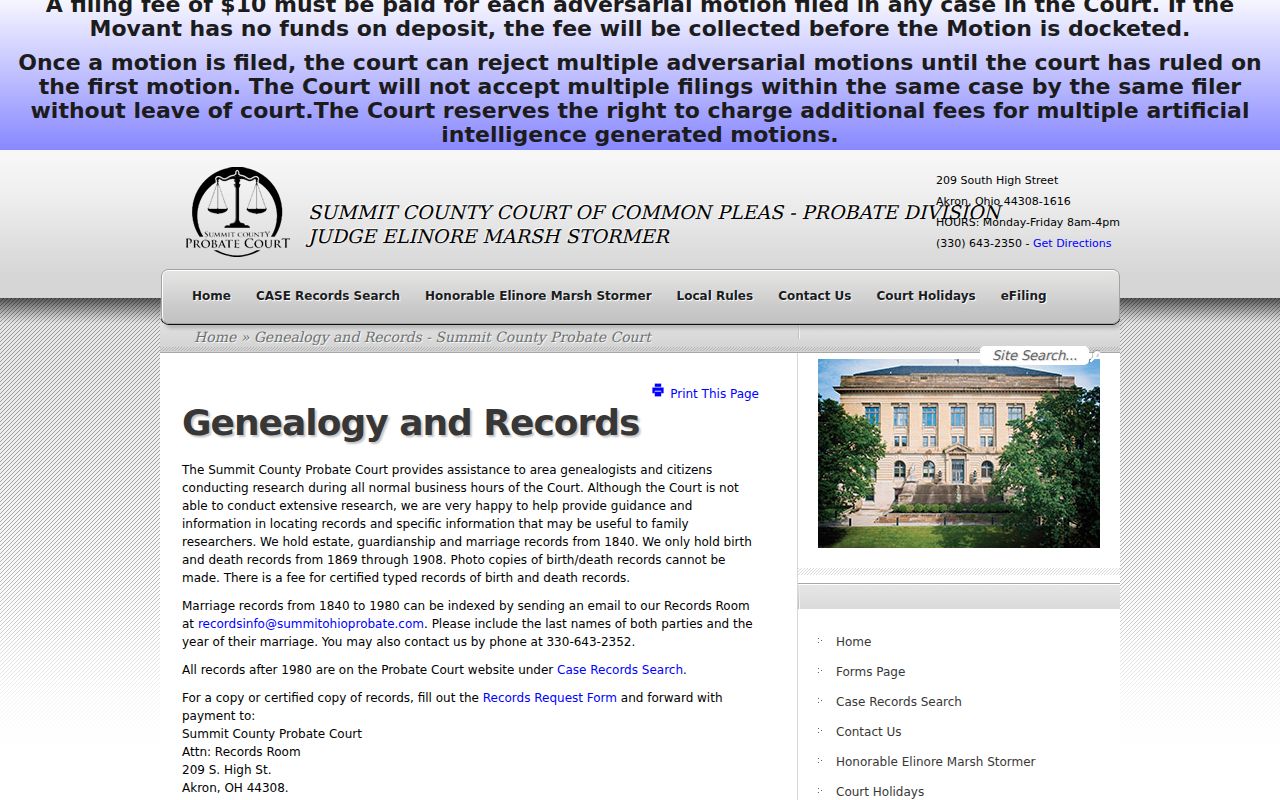
An estate or guardianship record can add a different document context to a Stow or Summit directory clue. The Summit Probate genealogy and records route provides an email, phone, and records-room path for local historical questions. Estate microfilm identified by the library guide covers 1841-1944, while the linked FamilySearch collection may have its own access conditions. Match time, address or legal description, and named roles before treating two records as connected.
For indexed historical marriage questions, the Probate research route asks for both surnames and the year. Its records contact is recordsinfo@summitohioprobate.com, with telephone assistance at 330-643-2352 and in-person records-room research. Use that route when the question is about a defined record, not an open-ended name search. The Records and Research Facilities guide can also point a researcher toward probate, recorder, cemetery, census, map, and archival paths. Because it is a historical guide, current hours and fees need confirmation with the office that holds the record.
The Probate genealogy and records page is shown below as a source route for a directory lead that needs documentary context.
A shared surname alone is not enough. Keep the directory page and the probate document separate until the dates and other identifying facts support a careful link.