
Stow Resident Lookup Record Paths
A Stow resident lookup is strongest when each record is assigned a narrow job. Summit Property Access can connect an address, parcel, and owner or tax-mailing information, but it does not establish who currently occupies a place. A recorded instrument identifies the parties to that filing. Court and probate records identify people in a proceeding and their roles. Vital sources divide a research lead from a certified record. Keep the source date and the exact field or document identifier with every result.
| Record path | What it can confirm | Stow or Summit custodian | Access route |
|---|---|---|---|
| Parcel and recorded instrument | Parcel context and named filing parties | Summit Property Access and Recording Division | Online property search, recorder image or copy request |
| Court case | Case type, parties, dates, and public docket availability | Stow Municipal Court or the applicable Summit Clerk division | Official court route or a targeted records request |
| Probate record | Estate, guardianship, marriage, or defined historic vital lead | Summit Probate Court | eServices, records contact, or counter review |
| Vital record | Certified event record or a historical index lead | Summit County Public Health, Probate, or Ohio History Connection | Order, request, or historical index |
| Credential or entity filing | A selected public status record or entity role | Ohio eLicense or Secretary of State | Type-specific state lookup |
Begin with the record that fits the question. An address question belongs with the parcel system first. A documented court question belongs with the right court. A family-history event has a different route again. A name hit by itself is only a lead, not a resident finding.
Stow Court Paths for Residents
The Summit Clerk public search begins with a division choice: Domestic, Civil, Criminal, Court of Appeals, or Naturalization. Select the record class before searching. A result or no-result in one division does not answer for the others. The Clerk’s historic Naturalization route is described for 1850 through 1991, but historical availability does not establish a person’s status today. Use the official Clerk domain, because the Clerk has warned about a look-alike court site.
The Summit Clerk public-search selector is shown below with the separate division entry point. It is a useful reminder to choose the court record system before relying on a name match.
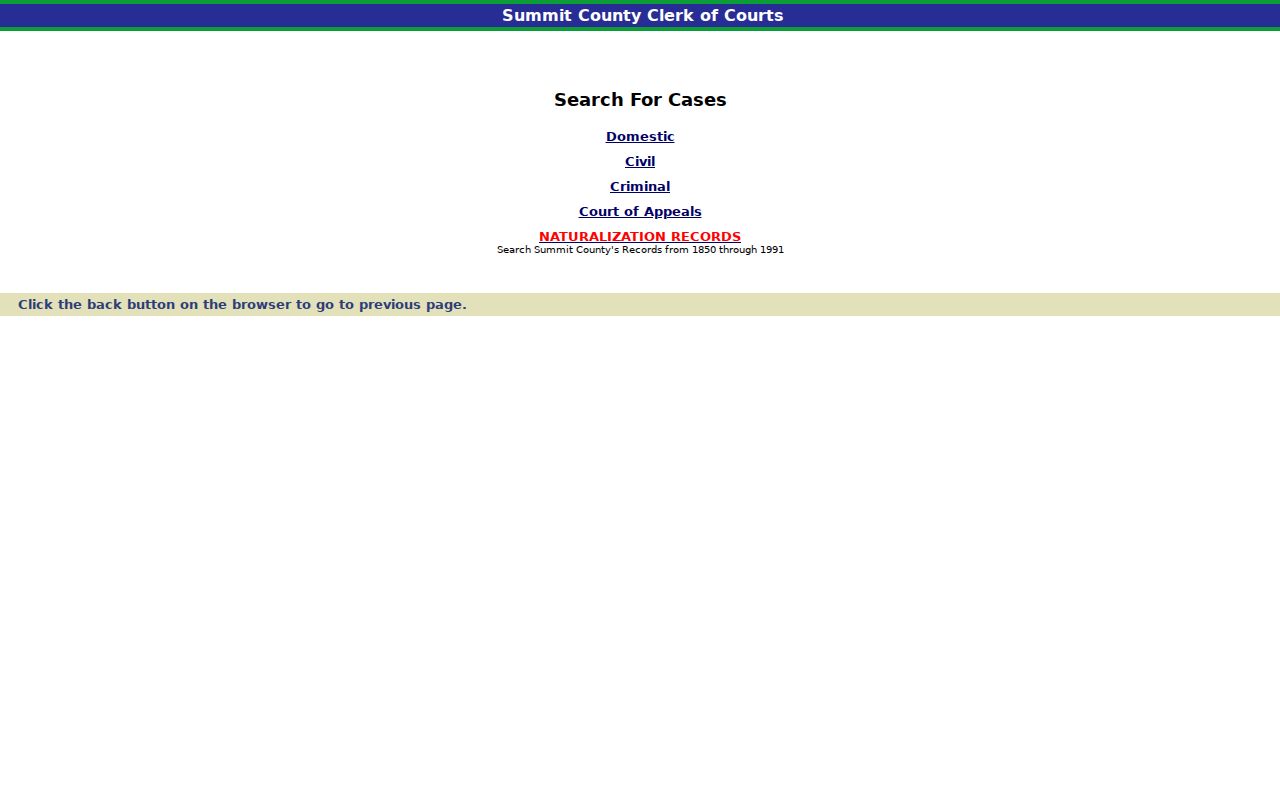
After selection, preserve the case number, caption, party role, case type, and event dates. The research did not inspect a live party-result screen, so there is no basis to claim additional search fields or result columns.
The legacy Summit Clerk division selector also directs visitors to the court split. Treat it as an official entry route, not proof that every Stow matter belongs in Common Pleas.
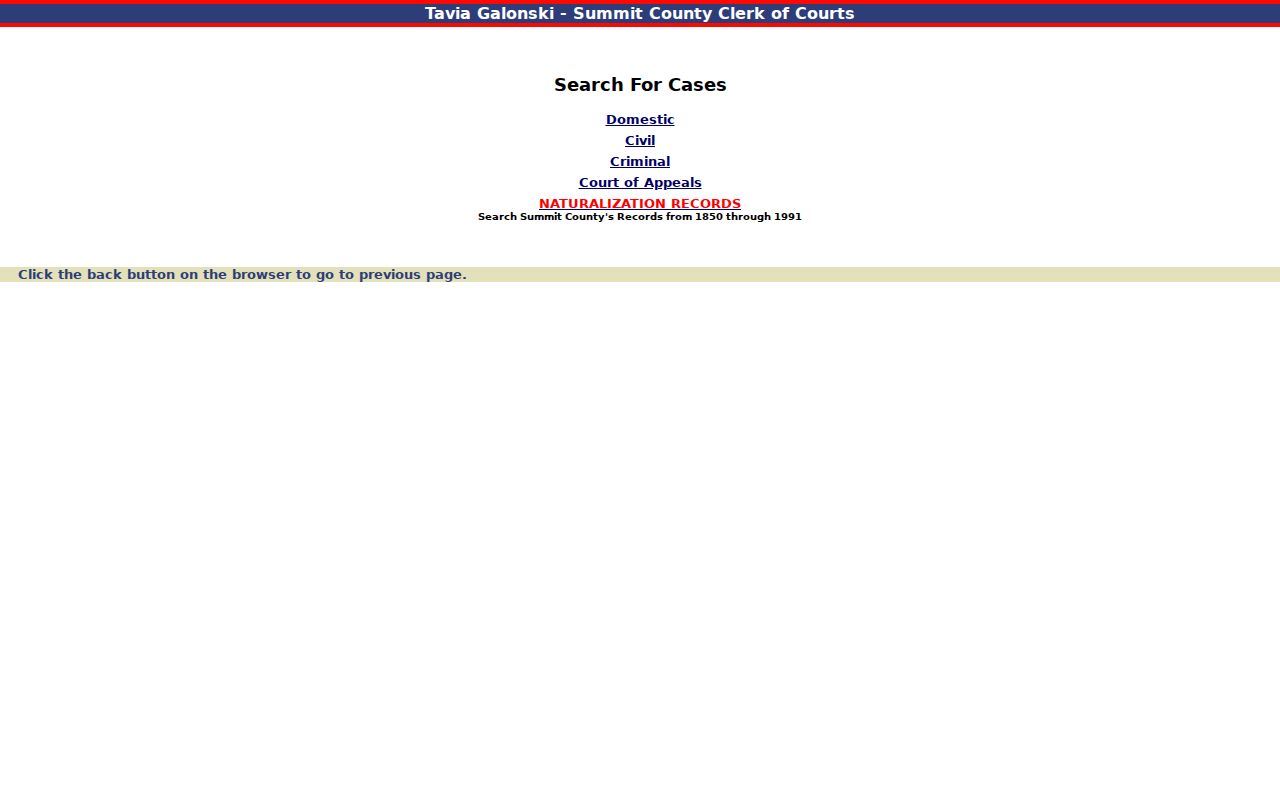
For a same-name result, compare case role, filing date, location, middle name, or a known case number before joining it to a Stow record. A caption can name a party, witness, attorney, estate, or another role.
The Ohio Supreme Court docket search is a separate appellate layer. It can search a case number or caption and offers advanced party or attorney searching, but it does not replace a Summit trial-court check.
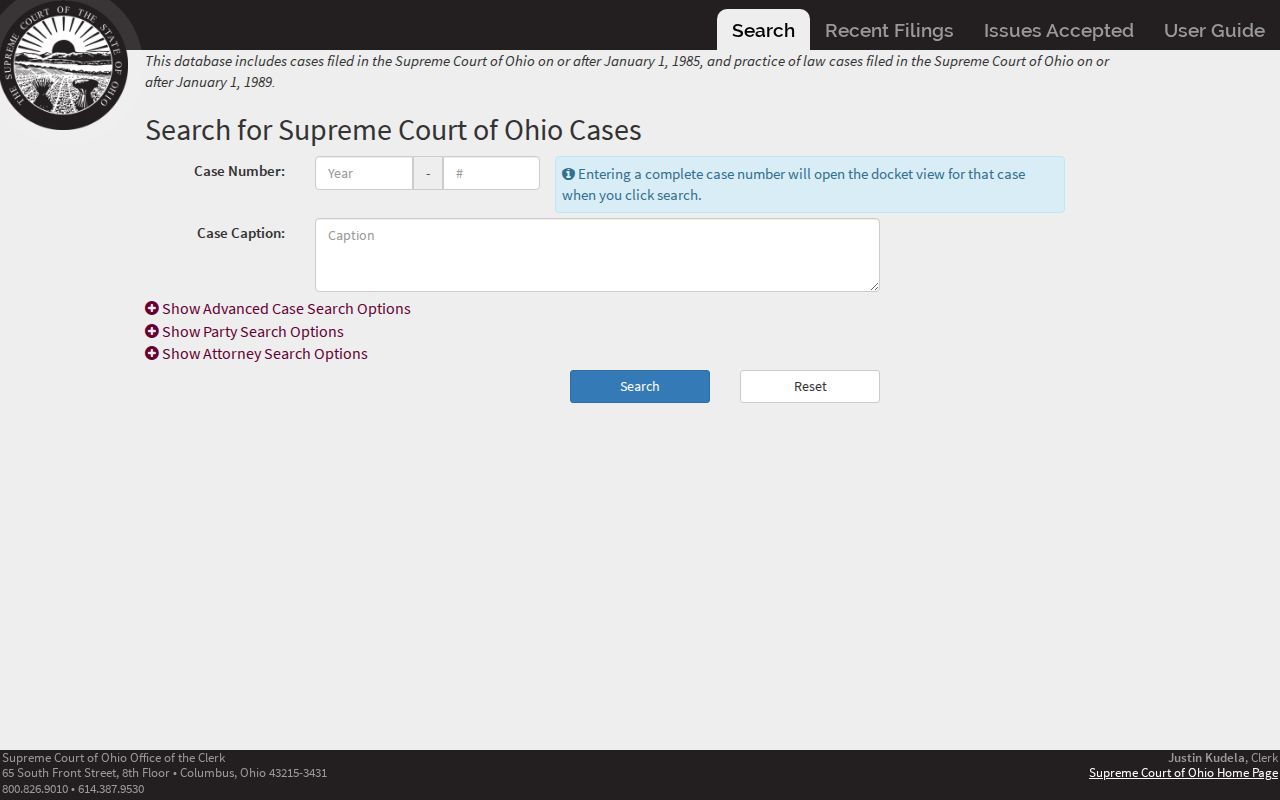
Use an appellate result only for the court record it actually represents. It should not be turned into a general profile of a person.
Note: A public docket can omit sealed entries, confidential material, and redacted identifiers even when a case exists.
Stow Probate and Municipal Records
Stow Municipal Court is not a Summit Clerk division. It covers misdemeanor, traffic, and limited civil matters within its statutory scope, while the city states a civil maximum of $15,000. Court type, claim amount, and location matter, so an address alone cannot select the right court. If a needed document is not available online, the Municipal Court’s records-request form asks for a document description, defendant name, arrest date or case number, optional SSN if possible, requester contact details, signature, and a delivery choice.
The Stow Municipal Court source shows the distinct local court route. The official records-request form lists copies at $.05 per page and certified pages at $1, with an ordinary 24-hour completion statement and a request to allow 48 hours. Those times are not guarantees for sealed, archived, or complex files.
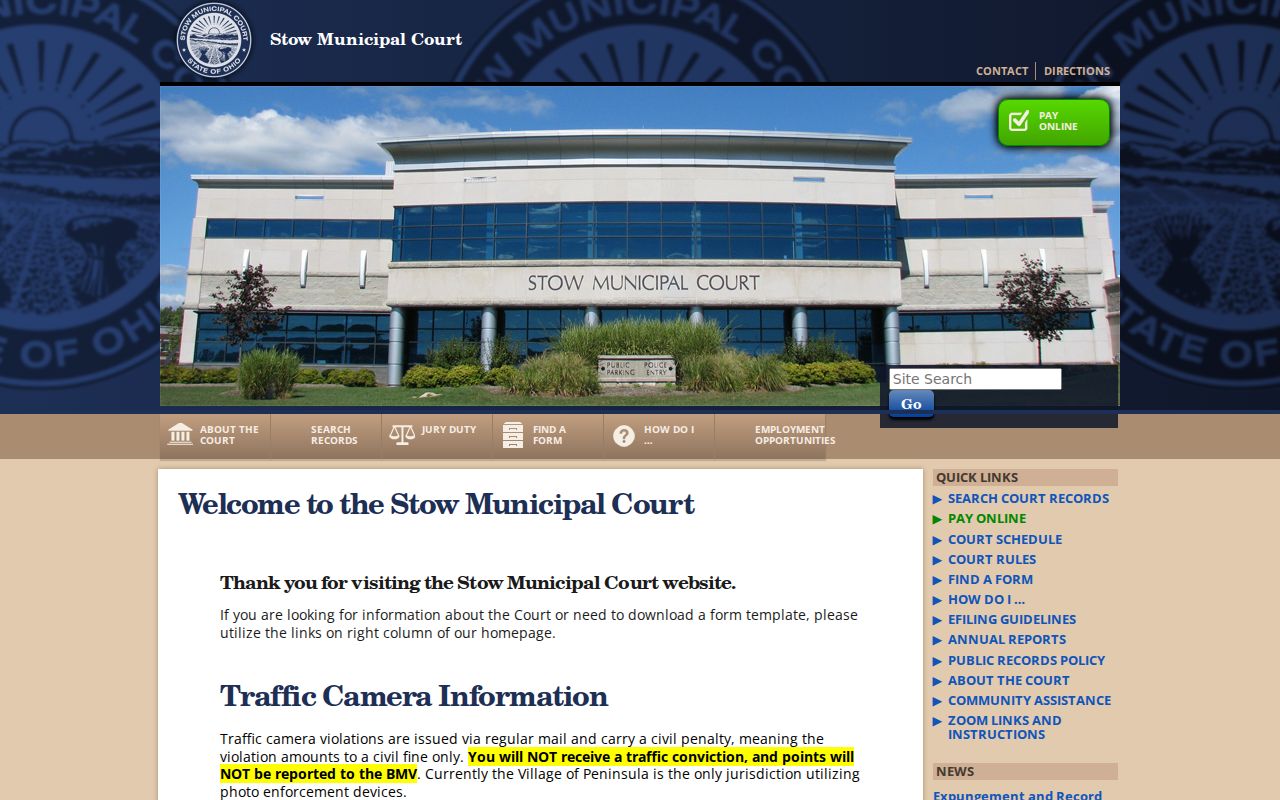
Request the existing record with a reliable identifier instead of guessing at a case number. The court also offers sealing and redaction forms, so a missing document may reflect a legal boundary.
For estates, guardianships, historic marriage leads, and selected historical vital material, Summit Probate eServices is a separate path. Pre-December 29, 1999 cases are searched by name; later case-number searches require the exact format, including spaces and leading zeros.
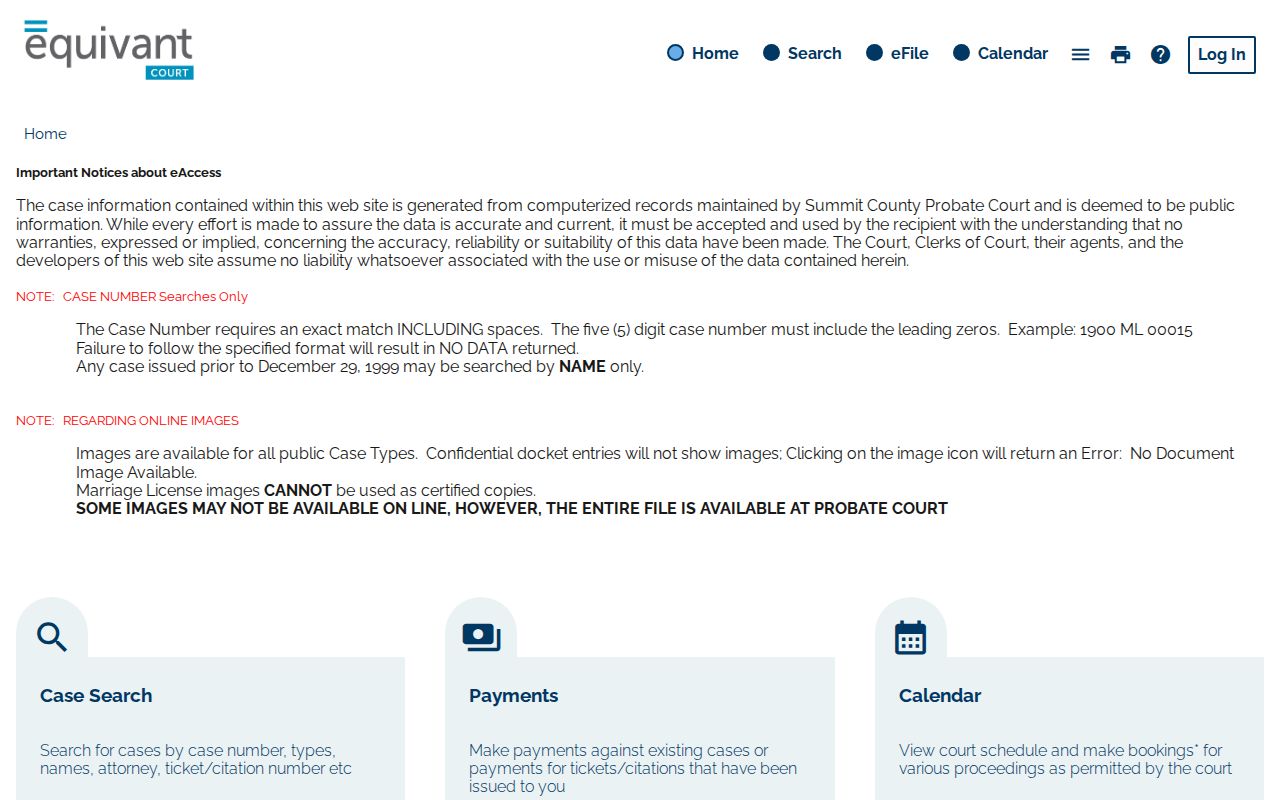
Probate says confidential docket entries have no document images, displayed images are not certified, and some files must be viewed at court. For an indexed historic marriage request, use both surnames and the year when contacting Probate.
Stow Vital Record Routes
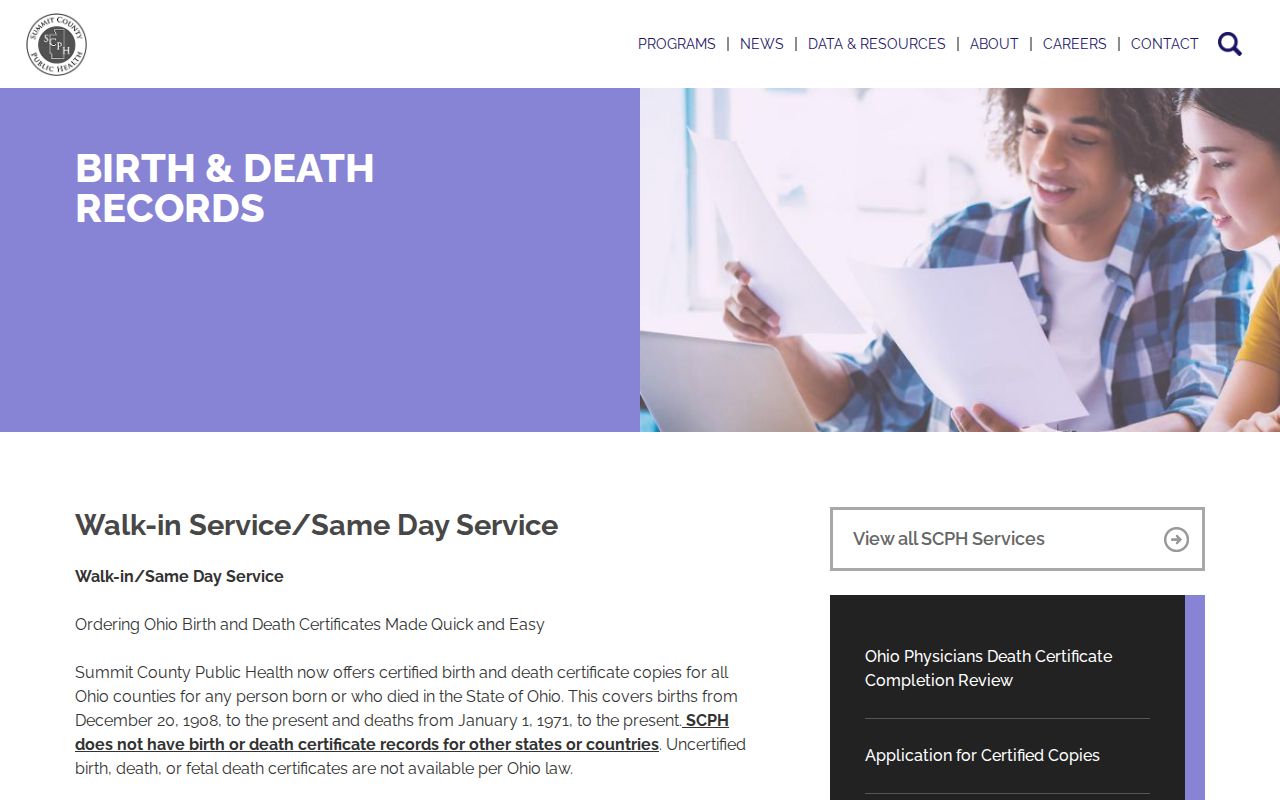
Current certified certificates and historical indexes are different evidence. Summit County Public Health provides certified Ohio birth records from December 20, 1908 to the present and describes death access from January 1, 1971 to the present on its walk-in page. The office offers walk-in, online, phone, and mail channels. Its application asks for purchaser contact information, the certificate name, event date, record type, copy count, purpose, signature, and payment information. Enter only facts known from a source.
The SCPH online vital-record order route uses name, event-date, parent-name, purpose, relationship, and quantity inputs. A spelling mismatch calls for a custodian inquiry, not repeated speculative searching.
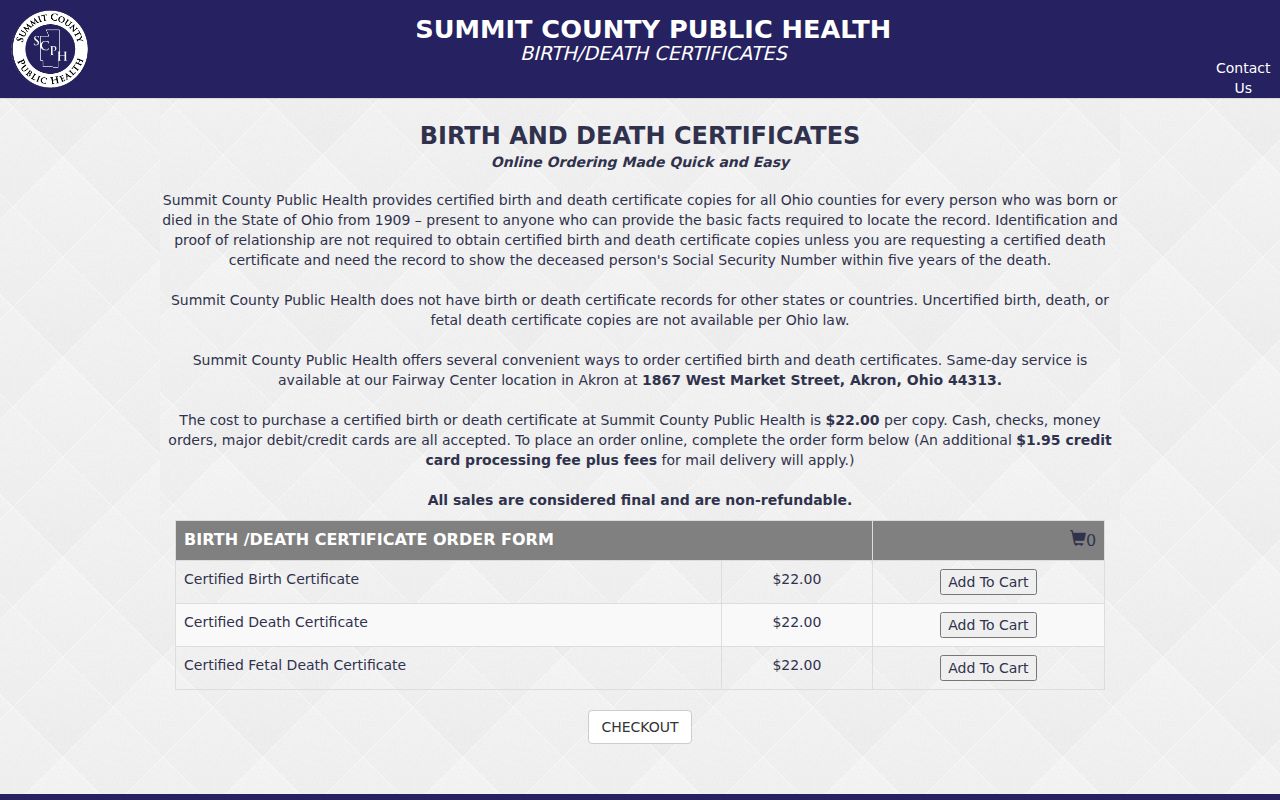
For walk-in service, SCPH lists a $22 certificate fee, no appointment, and ordinary birth and death certificate rules without a general identification requirement. Recent death SSN access has a separate eligibility and documentation rule.
The SCPH walk-in vital-record service gives the current local access details. It states the Fairway Center location in Akron, weekday hours, and an approximately ten-minute walk-in time subject to matching and system availability.
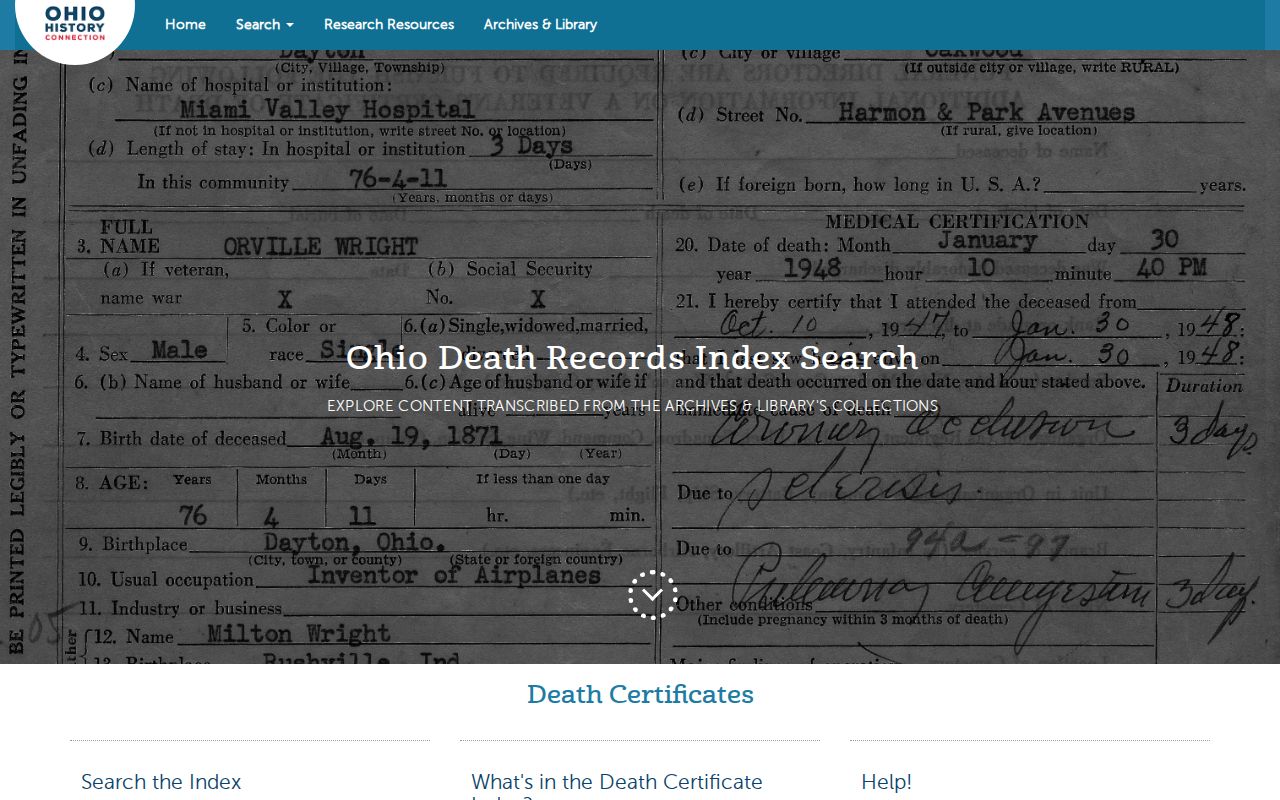
Marriage records and older local birth or death material follow the Probate route instead. Ohio History Connection’s death search is a historical index for defined periods, not a certified-copy service. A no-result may mean that a county original or microfilm was not sent to the state.
The Ohio History Connection historical death search shows the state index route. Compare event date, county, parents or spouse, age, and document type before connecting a result to a person.
Ohio vital-record law and administrative rules govern access and certification, but a law page is not an ordering form. Current charges, choices, and delivery options belong on the live custodian form.
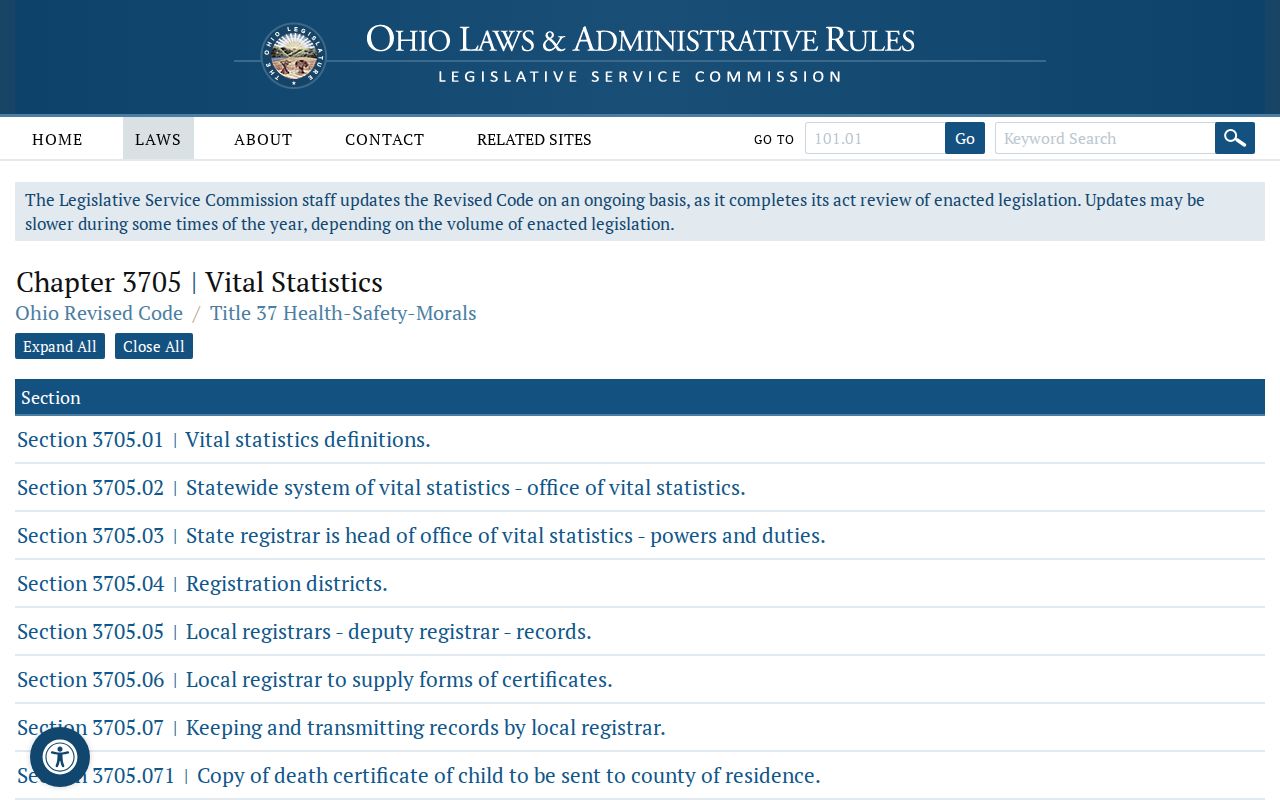
The Ohio vital-statistics statute explains the governing framework for a certified record. It supports the distinction between an official certificate and an index lead.
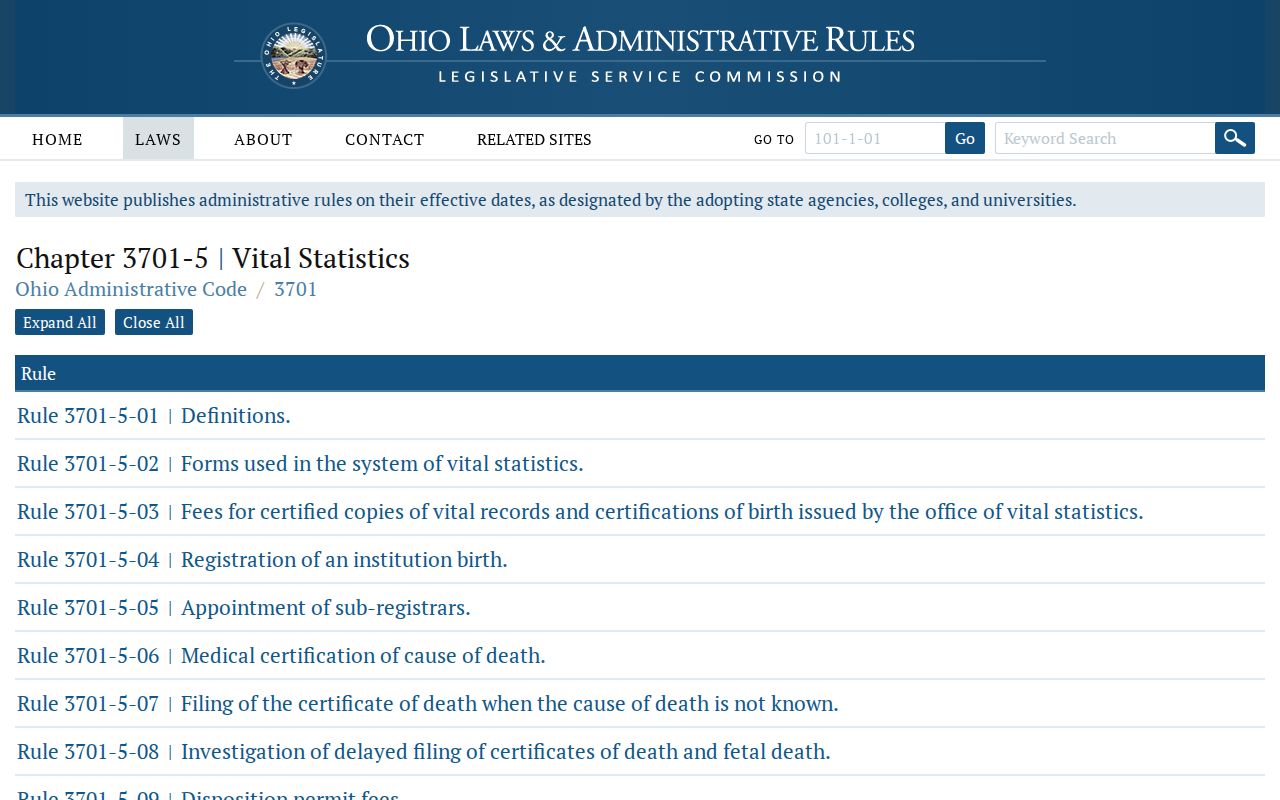
The Ohio vital-statistics administrative rules provide related regulatory context. Verify the live SCPH application before relying on an operational detail.
Note: A certified certificate carries different evidentiary weight from an index result, directory entry, or search screen.
Stow Voter Lookup Limits
Ohio Voter Lookup is an individual search, not a Stow address directory. Its opening fields are first name, last name, and county. Choose Summit County for Stow, then use the later street-name refinement only to distinguish matching voter results. The state’s own tips allow alternate first names, former last names, or a previous address in the correct county when an expected result does not appear.
The tool does not enumerate a street, prove a household, or verify that someone is currently present at an address. R.C. 3503.15 describes registration fields, while other laws protect particular identifiers, contact information, confidential records, and protected addresses. A no-result may reflect spelling, county, former name, status, or a protected record. For an official question, ask the Summit Board of Elections for the legally releasable existing record and accept a redacted response.
Verify a Stow Resident Lookup
Verification means testing whether independent records align, not collecting every result attached to a name. A strong match normally needs two aligning elements beyond the name, such as a middle initial, event date, spouse or parent, legal description, case number, documented address period, or another lawfully visible unique identifier. Start with a narrow record and retain the exact source, access date, and unresolved question.
- Search Summit Property Access by parcel, address number and street, or a carefully entered owner name when a property question exists. Record the parcel ID and distinguish situs from tax mailing data.
- Use the parcel’s transfer context to locate the related Recording Division instrument. Compare the legal description, document type, recording date, grantor, and grantee before following any earlier transfer.
- Select the correct court or Probate route only when a case, estate, guardianship, marriage, or dated event supplies a real reason to do so. Read the party role and case type.
- If a formal vital record is needed, ask the correct custodian for a certified copy or a defined historical search. Preserve any redaction, cost, or no-record response.
- Docket
- A court’s running list of filings, events, and case actions. It may not display every document or protected detail.
- Index and image
- An index points to a record. An image is the displayed document or scan, which may be redacted and may still not be certified.
- Certified copy
- A copy issued and certified by the custodian for a purpose that requires official certification. It is not the same as a search result.
A historical directory or yearbook can add a dated clue, not a present-tense answer. For an old address trail, use the Stow Directory Book collections before drawing a modern connection.
Stow Credential Results Need Context
Ohio eLicense is useful only after selecting the relevant credential type. Its public form includes License Type, Credential Number, First Name, Last Name, Maiden Name, State, and County. A no-result speaks only to the selected credential type. A displayed credential can support a narrow status question, but it does not establish residence, identity beyond the record, current availability, or a link to a parcel.
Ohio Secretary of State business records can identify an entity, its filing history, and a listed statutory agent. They do not supply an ownership list, and an agent address is a legal-contact field rather than a home address. UCC results likewise identify filing roles such as debtor or secured party; a financing statement is not a court judgment, debt balance, title record, or proof of residence.
Stow Resident Lookup Privacy Limits
Public access is not unrestricted republication. Stow’s public-records policy permits redactions and calls for legal authority with a written denial. Ohio Safe at Home participants may use a Secretary of State substitute address under R.C. 111.42 and 111.43. Qualifying public service workers can seek Internet-record address redaction under R.C. 149.45. Those programs and court sealing procedures do not create a route to trace a protected address from another filing.
Stow Municipal Court has address-redaction and personal-information-redaction forms. A court redaction affects that court record, not every county or state source. Motor-vehicle information is also restricted, and no Stow resident lookup should include it. When an official record appears wrong or improperly exposed, contact the original custodian with the document, case, or book-and-page identifier rather than asking a different office to guess.
Lawful use. Use official Stow and Ohio records for a specific, lawful personal question. Do not use a result to stalk, harass, intimidate, impersonate, or contact someone at a protected address.